NABH Accredited Ayurveda Hospital


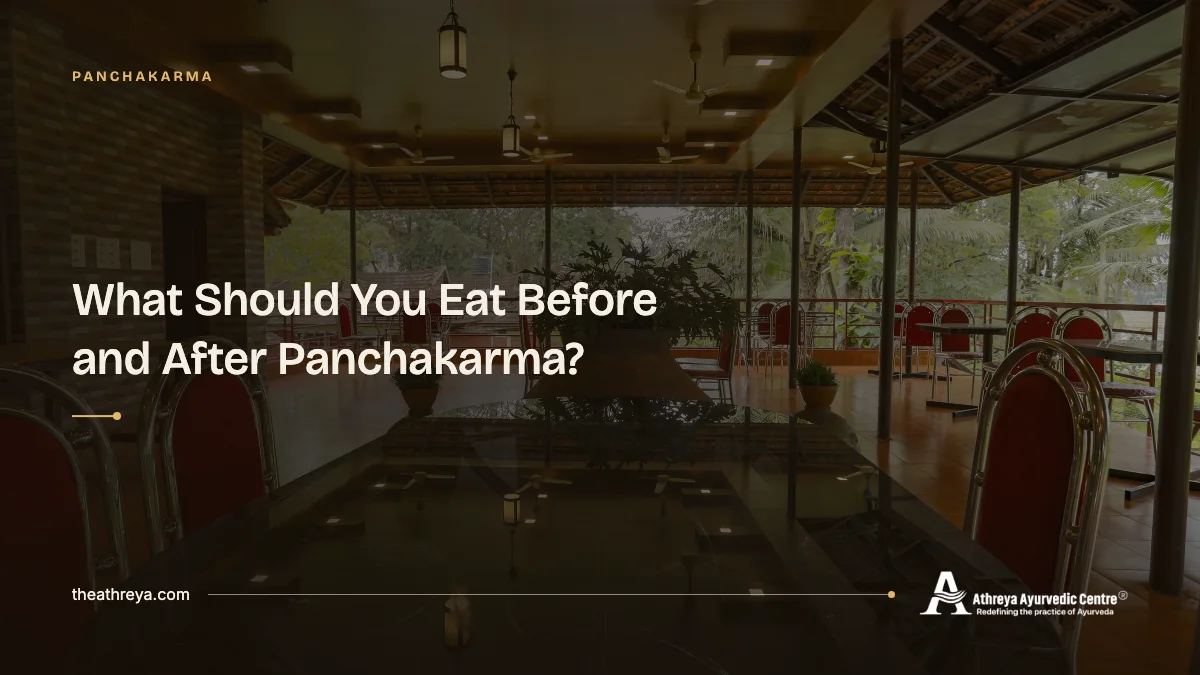

Panchakarma doesn’t end when you leave Kerala — what you eat in the weeks before and after has a real effect on how well your body prepares for the process and how long the benefits last afterward.
Before Your Programme
In the two to three weeks leading up to arrival, shift gradually toward warm, freshly cooked, easily digestible food. Reduce fried, processed, and heavily spiced dishes, along with alcohol and excess caffeine. This isn’t about restriction for its own sake — it’s about not asking your digestive system to manage a heavy, hard-to-process diet at the same time it’s about to begin a purification process. Think simple grains, cooked vegetables, warm soups, and moderate portions rather than a specific “detox diet.”
During Your Programme
Meals at Athreya are prepared specifically to support whichever phase of Panchakarma you’re in — light and digestible during preparation, carefully managed during the core purification phase, and gradually rebuilding in the restoration phase. This is decided by your physician based on your daily response, not a fixed menu applied to everyone regardless of condition.

After You Leave — The Phase Most People Skip
This is the part guests most often underestimate. The restoration phase (Paschatkarma) doesn’t end the day you check out — your digestive fire (Agni) is still rebuilding for weeks afterward, and returning immediately to a heavy, processed, or irregular diet can undo much of what the programme achieved. Our physicians provide specific post-departure dietary guidance tailored to your condition, typically recommending a gradual reintroduction of richer foods over several weeks rather than an immediate return to your pre-programme diet.
The Realistic Version
You don’t need to eat perfectly for the rest of your life for Panchakarma to have been worthwhile. But the guests who sustain their results longest are consistently the ones who take the post-departure dietary guidance seriously for at least the first month, rather than treating the programme as a reset that undoes itself the moment they’re home.
This article is for general information only. Please consult a qualified physician about dietary guidance specific to your health condition.